
Benchmark source
We use public influencer-pricing benchmarks summarized by Influencer Marketing Hub as a rough starting point for earnings per post.


Calculate your Twitter account value and potential earnings per tweet
Based on public benchmark methodology published by Influencer Marketing Hub
Editorial Note
TwitFlow is built for founders, creators, operators, and indie hackers who want a lighter writing workflow for X/Twitter. Our guides are written by humans, updated regularly, and grounded in product usage, practical examples, and sourced claims.
This page is maintained as a practical estimation tool, not a promise of sponsorship revenue. The benchmark is based on third-party methodology, so creators can use the result as a reference range instead of a guarantee.
Last reviewed: June 19, 2026. For corrections, feedback, or partnerships, contact hello@twitflow.app.
Pixie Wong leads editorial strategy at TwitFlow, focusing on practical writing workflows for X/Twitter creators. She reviews and updates guides with product-backed examples so readers can apply each framework quickly.
Step 1
Use your follower count plus rough totals for tweets, likes, and reposts. The goal is not accounting precision. The goal is to get a consistent benchmark you can compare over time.
Step 2
A range is more honest than a single price tag. It gives you a lower and upper bound so you can judge whether your audience looks passive, average, or unusually responsive for its size.
Step 3
The useful workflow is to rerun the same profile a month later. If the range rises while follower growth stays modest, your content quality and audience response are probably improving.
Most people ask “what is a Twitter account worth?” when they are really asking a more practical question: is an audience strong enough to justify sponsorship pricing, creator partnerships, or a heavier investment in content? This calculator is not a promise of what a brand will pay tomorrow. It is a structured way to translate follower count and engagement into a rough value range you can reason about.
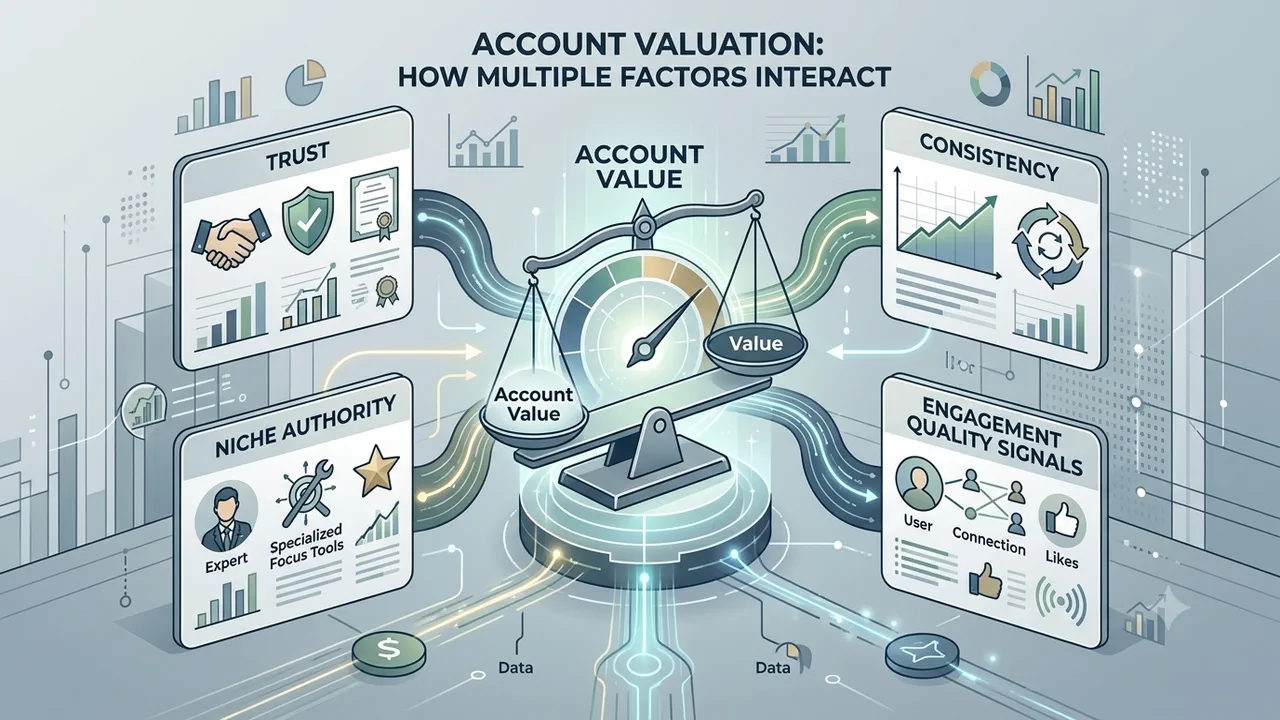
That distinction matters because follower count alone is a weak signal. Ten thousand followers with low interaction often matter less than a smaller audience that regularly replies, reposts, and clicks through. The goal of this page is to make that relationship visible. If your estimated value feels lower than expected, that usually means your next lever is not chasing more followers blindly. It means improving the quality, consistency, and clarity of the content you publish.
Benchmark source
We use public influencer-pricing benchmarks summarized by Influencer Marketing Hub as a rough starting point for earnings per post.
Inputs used here
The estimate combines follower count with engagement totals because audience size without response quality is a weak pricing signal on its own.
What it cannot know
It cannot see your niche strength, conversion quality, brand fit, or off-platform business value. That is why the page shows a range, not a single promised price.
This calculator uses a public benchmark model published by Influencer Marketing Hub. The benchmark is adapted into a simple reference workflow for creators who want to compare audience strength over time, not generate a literal market quote.
Reference links: Influencer Marketing Hub calculator methodology. We use that public benchmark as a directional input, then cap the engagement multiplier so a small set of outlier numbers does not create unrealistic estimates.
Example inputs
This is not a celebrity account, just the sort of creator or founder profile that is common in niche Twitter ecosystems. It is useful because it shows how engagement quality can matter more than raw vanity metrics.
How to interpret it
A value range is most helpful when you compare it against what your account looked like 30 or 60 days ago. If the number improves while your follower count barely changes, engagement quality is improving. If follower count rises but value stays flat, your content may be attracting attention without building meaningful response. That is where a drafting tool like TwitFlow becomes relevant: stronger hooks, clearer takes, and more consistent posting can change the quality of the audience you build, not just the quantity.
Micro
Small accounts can still score well when replies and reposts are unusually strong for their size. Engagement quality matters more than raw reach here.
Mid-size
This is where consistency, audience trust, and post clarity start to separate stronger creator businesses from accounts that only look good on paper.
Large
Larger accounts gain more from stable posting systems and audience trust. A big follower count with weak response quality can still underperform the range people expect.
If you would rather see the output before entering your own numbers, this is the kind of range the calculator produces for the sample 18.5K-follower profile shown above.
Illustrative output
How to read it
The point of the calculator is not to hide a magic number behind a button. It is to turn a few visible profile inputs into a rough benchmark you can inspect and challenge.
Sample input
What happens next
This example is intentionally simplified, but the useful part is the shape of the process: public inputs, visible assumptions, capped multipliers, then a range instead of a sales promise.
The easiest way to increase account value over time is to avoid posting droughts. TwitFlow helps turn rough ideas into usable drafts quickly so you have more to publish when consistency drops.
Better hooks and clearer angles can improve replies, reposts, and profile visits. The calculator rewards that kind of engagement more than passive follower growth.
You can use this page as a monthly checkpoint. Generate better posts with TwitFlow, keep posting, then re-run the calculator to see whether engagement quality is moving in the right direction.