

Last updated: June 12, 2026
Thread Writing Guide
50+ Thread Hook Templates That Stop The Scroll
The first tweet decides whether people keep reading. These templates are proven opening patterns used by top creators to increase completion and replies.
Editorial Note
Reviewed by Pixie Wong
TwitFlow is built for founders, creators, operators, and indie hackers who want a lighter writing workflow for X/Twitter. Our guides are written by humans, updated regularly, and grounded in product usage, practical examples, and sourced claims.
This page focuses on practical hook choices for threads, not just copy lines. We revise examples based on clarity and engagement feedback.
Last reviewed: June 12, 2026. For corrections, feedback, or partnerships, contact hello@twitflow.app.

Pixie Wong leads editorial strategy at TwitFlow, focusing on practical writing workflows for X/Twitter creators. She reviews and updates guides with product-backed examples so readers can apply each framework quickly.
Why the first tweet matters
- ▸People decide to read or skip in around 2 seconds.
- ▸A clear hook sets expectation and payoff fast.
- ▸Strong hooks improve completion and reply quality.
Hook Templates by Type
Type 1
Numbered List Hooks
Numbers create clear expectations and make long threads easier to scan.
Type 2
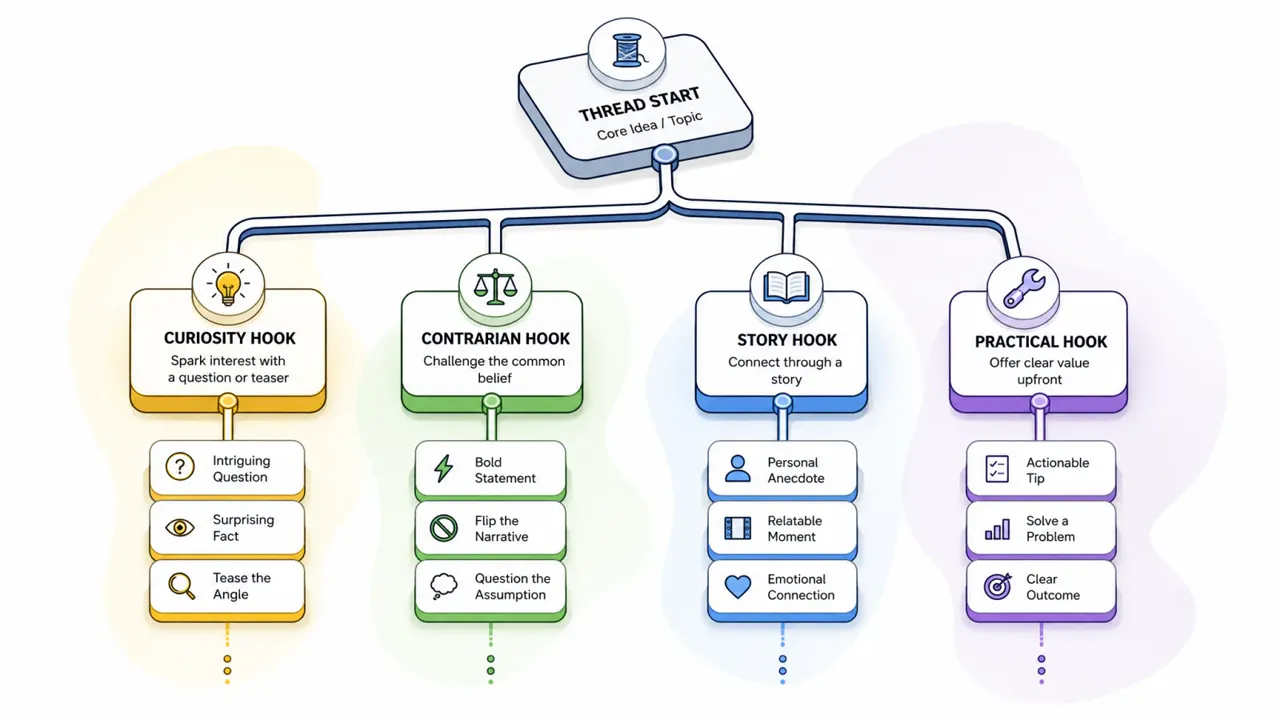
Contrarian Hooks
Challenge conventional advice to create immediate tension and curiosity.
Type 3
Problem-Solution Hooks
Name the pain clearly, then promise a practical fix.
Type 4
Story Hooks
Lead with a specific moment to build emotional connection quickly.
How to use these hooks
- 1.Pick a hook type that matches your thread goal.
- 2.Replace placeholders with a concrete topic, result, or timeframe.
- 3.Read it out loud and remove stiff words.
- 4.Draft two versions and keep the clearest one.
Turn a Hook Into a Full Thread
Copy any template and expand it in TwitFlow Thread mode in around 30 seconds.
Try Thread Mode Free ->